

Students, Waste, and Responsibility: The Fly-Tipping Problem in Newcastle

Students, Waste, and Responsibility: The Fly-Tipping Problem in Newcastle
Fly-tipping— the illegal dumping of waste—has become a persistent issue across the UK, but in Newcastle, it has taken on a distinct local dimension. In areas with large student populations such as Jesmond and Heaton, concerns have grown over the role students play in seasonal spikes of rubbish dumping. While the issue is complex and involves multiple factors, the intersection between student lifestyles and waste disposal practices has become a focal point for residents, councils, and universities alike.
A Seasonal Surge in Student Areas
Each year, Newcastle experiences noticeable increases in fly-tipping during key student transition periods, particularly in January and at the end of the academic year. These moments—when students move out of shared accommodation—often result in large volumes of unwanted furniture, household items, and general waste being left behind.
According to local reporting, residents in Jesmond have repeatedly raised concerns about discarded items such as furniture, tyres, and even large objects like football tables being dumped in streets and private spaces.
This pattern is not just anecdotal. Data shows that Newcastle has one of the highest rates of fly-tipping in England, with around 51 incidents per 1,000 people—more than double the national average. Such figures suggest the issue is both widespread and concentrated, particularly in densely populated student neighbourhoods.
Why Students Contribute to Fly-Tipping
It would be overly simplistic to blame students alone, but several factors explain why they are often associated with the problem:
Short-term tenancies: Students typically rent for fixed academic periods, leading to mass move-outs at the same time.
Lack of transport: Many do not own cars, making it harder to take bulky waste to recycling centres.
Limited awareness: Some students may not fully understand local waste disposal rules.
Convenience culture: Leaving items beside bins or in alleyways can seem easier than arranging proper disposal.
A study cited in local coverage found that 81% of 18–24-year-olds admitted to leaving rubbish beside full bins, highlighting a broader behavioural trend among the age group.
Impact on Communities
For permanent residents, the consequences are immediate and visible. Overflowing bins,
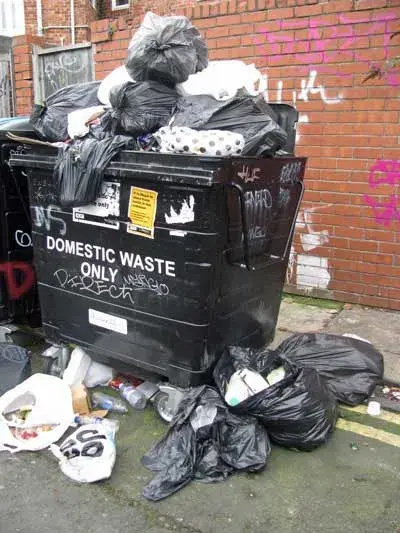
dumped furniture, and scattered rubbish can:
Attract pests and vermin
Create unpleasant living environments
Block pathways and access routes
Increase clean-up costs for councils and taxpayers
In some cases, residents report feeling frustrated and ignored, particularly when illegal dumping occurs on private property or in shared spaces.
Efforts to Address the Problem
Recognising the recurring nature of student-related fly-tipping, local authorities and universities have begun working together on preventative measures.
Initiatives include:
Free skip schemes during move-out periods, allowing students to dispose of waste more easily
Donation campaigns, encouraging reuse of items like clothes, books, and furniture
Awareness drives, informing students about responsible waste disposal
One such campaign collected over 10 tonnes of waste, helping reduce potential fly-tipping in student-heavy areas.
At a broader level, Newcastle City Council has supported tougher enforcement measures, including increased surveillance and stronger penalties for offenders. Fly-tipping is a criminal offence, with offenders facing unlimited fines or even prison sentences in serious cases.
A Shared Responsibility
While students are often at the centre of the conversation, fly-tipping is ultimately a shared responsibility. A “small minority” of offenders—whether students or not—can have a disproportionate impact on communities.
Addressing the issue requires cooperation between:
Students, who must take greater responsibility for their waste
Universities, which can educate and support sustainable behaviour
Councils, which must provide accessible disposal options and enforce regulations
Residents, who can report issues and engage in community solutions
Conclusion
The problem of student fly-tipping in Newcastle reflects a wider challenge faced by cities with large transient populations. While students contribute to seasonal spikes in waste, the issue is rooted in infrastructure, awareness, and behaviour as much as individual responsibility.
Reducing fly-tipping will depend not just on stricter enforcement, but on making it easier—and more normal—for everyone to dispose of waste responsibly. Only through a combined effort can Newcastle maintain clean, liveable neighbourhoods for both students and long-term residents.


Comments